Posts

Showing posts with the label Genocide

We Remember: The 20th Anniversary of the Rwandan Genocide and the Power of Forgiveness

Image
Two weeks ago the BBC (British Broadcasting Corporation) heralded the twentieth anniversary of the Rwandan genocide, which began in April of 1994 and lasted for 100 days until June of that same day. It became know as the quickest mass execution and killing spree since the Holocaust. In 1994, the Hutu president of Rwanda’s plane was shot down, and the blame was put on the Tutsis, who had historically been in power, but there wasn’t any hard evidence to who shot down the plane. This incident followed the peace process between ethnic Tutsis and Hutus, which only erupted into a civil war turned genocide when Hutu radical militias known as the interhamwe went from village to village, encouraging Hutus to murder their Tutsi neighbors and any Tutsi sympathizers. Graves still remain in Rwanda, and bones and sinew still arise out of the churches where Tutsis and Tutsi sympathizers went for safety but were instead trapped to be hacked to death. Hutus and Tutsis now l...
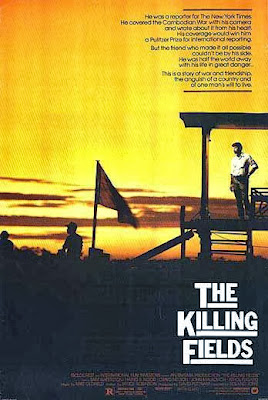
Ignorance Is Survival: A Film Review of The Killing Fields

Image
Cambodia: the name evokes pictures of poverty and sex trafficking for many people today. But not so long ago, there was one government’s genocide against its own people. The film, The Killing Fields , is a small account of that genocide that took place there in the 1970’s during the culmination of the Vietnam War. Sydney Schanberg played by actor Sam Waterston was one of the main protagonists of the story, but really he is the medium for which the film’s hero, Dith Pran tells his story. Schanberg was The New York Times journalist in Cambodia right before and at the set of the Khmer Rouge takeover of Cambodia and its capital, Phnom Penh. Pran was Schanberg’s interpreter and guide through Cambodia so Schanberg could obtain the necessary photos and information for his New York Times stories. Schanberg was forced to evacuate with the other foreigners living in Cambodia once the Khmer Rouge had taken over, leaving Pran to survive on his own in one of the Khmer Roug...

"To Give Life is to Live": A Critique of Schindler's List - Part 2

Image
Allusive Scenes of Dehumanization Schindler’s List had multiple scenes of constant disposal of the Jews’ clothes, suitcases and their belongings. The Nazis would take their luggage before boarding trains, convincing their Jewish subjects that their luggage would arrive with them to their destination, but it never did. Instead, the Nazis collected the Jews’ belongings and mined through them for valuables – real silver menorahs, teeth with silver and gold fillings, and diamond and silver jewelry. In a sense, the Jews were debased to their belongings’ worth, once again dehumanizing the Jews as commodities and disposed goods that would soon be forgotten. The classical music composition for one of these scenes was titled “Stolen Memories”, which was what was depicted – lost memories, ravaged by the Nazis to blot out the history of millions of people who could only be remembered by those who lost them in the War. The last scene of dehumanization that I would like...

"To Give Life is to Live": A Critique of Schindler's List - Part 1

Image
Image from Google Images Life is full of pain, but “A man who saves one saves the world entire,” according to the Talmud. Schindler’s List is the story of that one man, who known to many as a war profiteer, womanizer and Nazi party member became the saving force for 1,100 Polish Jews during the Holocaust. Oskar Schindler was his name, and this film was about his acts that saved generations of people. So, from what began as an independent historical fiction film series evolved into a film series about genocide, which plays such a larger role in recent wars of the last and current centuries. The themes most present in this film were the good versus evil complex, power, equality and dehumanization. In a detailed foil analysis of Amon Goeth and Oskar Schindler and the director’s constant use of cinematography to depict different interpretations of the humanization of Jews, Schindler’s List contained the essence of the Holocaust in its many horrors yet its human...