Posts

We Remember: The 20th Anniversary of the Rwandan Genocide and the Power of Forgiveness

Image
Two weeks ago the BBC (British Broadcasting Corporation) heralded the twentieth anniversary of the Rwandan genocide, which began in April of 1994 and lasted for 100 days until June of that same day. It became know as the quickest mass execution and killing spree since the Holocaust. In 1994, the Hutu president of Rwanda’s plane was shot down, and the blame was put on the Tutsis, who had historically been in power, but there wasn’t any hard evidence to who shot down the plane. This incident followed the peace process between ethnic Tutsis and Hutus, which only erupted into a civil war turned genocide when Hutu radical militias known as the interhamwe went from village to village, encouraging Hutus to murder their Tutsi neighbors and any Tutsi sympathizers. Graves still remain in Rwanda, and bones and sinew still arise out of the churches where Tutsis and Tutsi sympathizers went for safety but were instead trapped to be hacked to death. Hutus and Tutsis now l...

Building Capacity

Image
When I look back at the first two months of my new AmeriCorps position with Connections to Success (CtS) , I am shocked at how quickly it has flown by and by how much I have learned. Yet, there is so much more for me to learn. The weeks have flown by, and the first quarter of my term is coming closely to an end. And I think to myself, “Am I building capacity?” Image from Google Images When VISTAs (Volunteers in Service to America) talk about building capacity, they mean that they are establishing institutions and procedures to be put in place and utilized after the VISTA term ends to help the organization run more efficiently and to help more clients. My job as the program assistant is to track participant data and create project-tracking tools to enhance efficiency and performance of the poverty-fighting procedures and techniques at hands. You would say, “So you track numbers?” But I track more than numbers and data in Excel; I combine those numbers togethe...

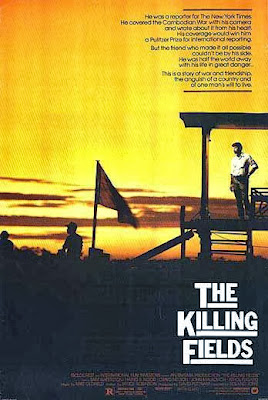
Ignorance Is Survival: A Film Review of The Killing Fields

Image
Cambodia: the name evokes pictures of poverty and sex trafficking for many people today. But not so long ago, there was one government’s genocide against its own people. The film, The Killing Fields , is a small account of that genocide that took place there in the 1970’s during the culmination of the Vietnam War. Sydney Schanberg played by actor Sam Waterston was one of the main protagonists of the story, but really he is the medium for which the film’s hero, Dith Pran tells his story. Schanberg was The New York Times journalist in Cambodia right before and at the set of the Khmer Rouge takeover of Cambodia and its capital, Phnom Penh. Pran was Schanberg’s interpreter and guide through Cambodia so Schanberg could obtain the necessary photos and information for his New York Times stories. Schanberg was forced to evacuate with the other foreigners living in Cambodia once the Khmer Rouge had taken over, leaving Pran to survive on his own in one of the Khmer Roug...

An AmeriCorps VISTA’s Journey: Weeks 1&2 – November 18th -29th

Image
On November 18 th , I stepped into the office of my new job as an AmeriCorps VISTA (Volunteer in Service to America) with the non-profit Connections to Success. AmeriCorps is similar to a domestic version of the Peace Corps, but there are more venues and fields that participants can volunteer with. In addition, an AmeriCorps commitment is usually only one year long compared to the two-year commitment of the Peace Corps. The VISTA differentiation means that my position specifically focuses on the alleviation of poverty in a community through building capacity of current programs and processes.             Connections to Success Image from Google Images The non-profit organization for which my VISTA program partners with is called Connections to Success (CtS). Connections to Success seeks to break the cycle of poverty through the empowerment of individuals through professional development and access to...

Kahlil Gibran Speaks on Love

“Love has no other desire but to fulfill itself. But if you love and must needs have desires, let these be your desires: To melt and be like a running brook that sings its melody to the night. To know the pain of too much tenderness. To be wounded by your own understanding of love; And to bleed willingly and joyfully. To wake at dawn with a winged heart and give thanks for another day of loving; To rest at the noon hour and meditate love’s ecstasy; To return home at eventide with gratitude; And then to sleep with a prayer for the beloved in your heart and a song of praise upon your lips.”  Kahlil Gibran, The Prophet (14)

Words from Kahlil Gibran

In your aloneness you have watched with our days, and in your wakefulness you have listened to the weeping and the laughter of our sleep. Now therefore disclose us to ourselves, and tell us all that has been shown you of that which is between birth and death.   - Kahlil Gibran, The Prophet (10)

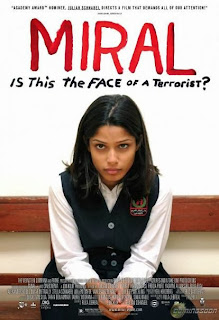
Miral’s Mystery: A Film Analysis

Image
Born and raised in Jerusalem in the second half of the twentieth century could confuse one’s identity. Palestinian versus Israeli. Muslim Arab versus Muslim Israeli. The longest and most fought-over city in the world was the location of the film Miral . Miral was the name for the red flower that grew on the side of the road in Jerusalem. This flower was a witness to lots of the pain and change in the lands of Israel and Palestine like Miral, the film’s protagonist. Image from Google Images Miral was born to a mother who underwent sexual abuse as a child and an imam father who loved her mother despite of her pain and addictions. Miral came of age in an all-girls school. The school was the product of one woman’s desire to help orphaned Palestinian children during the 1948 war. Each subsequent war brought more orphans and more girls. After Miral lost her mother, her father decided to send her to the girls school for her education and well-being because her ...